Revolt and Rebellion
Scroll for moreEnslaved Africans used work stoppages, escape, and violent revolt to resist enslavement.
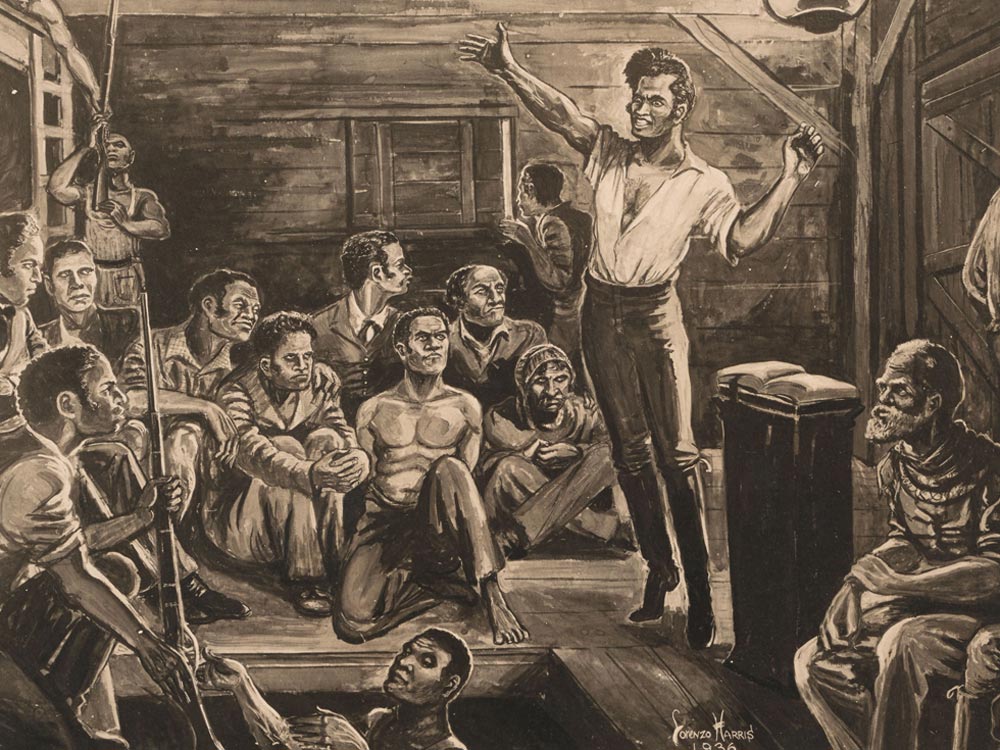
Enslaved Africans and their descendants throughout the Caribbean and the Americas used a variety of tactics to resist prolonged captivity including work stoppages, escape, and violent revolt. Though these communities were separated by distance and language barriers, many of the revolts featured similar characteristics: inspired by charismatic leaders who were often literate or skilled artisans, the resistors were aided by runaway communities, employed the use of any available weapons or tools, and were organized using secret messages often communicated under the cloak of cultural or religious traditions.
Documented revolts in Jamaica, Puerto Rico, and Suriname date back to the late1700s. The largest rebellion in the British colonies, known as Cato’s Rebellion, took place in South Carolina in September 1739 when scores of enslaved Africans began an armed march to Spanish Florida and fought militia who tried to stop them. After the revolt, the colonial legislature passed the Negro Act of 1740, restricting the assembly, education, and movement of enslaved people, and barred importation of African slaves for ten years.
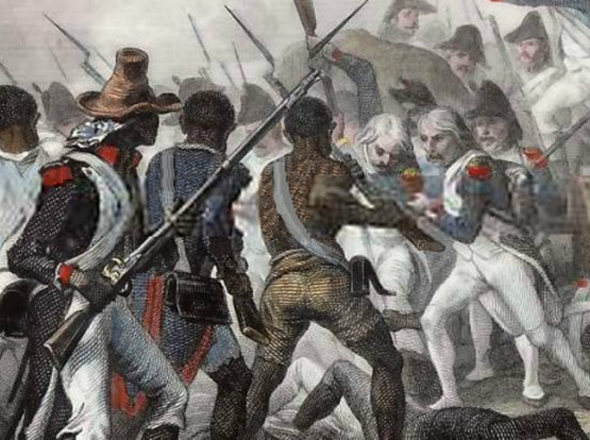
Resistance continued throughout the 19th century aboard slave trading vessels such as the Amistad (1839) and the Creole (1841), and in Barbados (1816); Cuba (1825); Bahia, Brazil (1835); and Guyana (1823). Saint- Domingue, later renamed Haiti, provided the most dramatic example of organized resistance when, in 1791, a revolt lead by Toussaint L’Ouverture evolved into a full revolution against Napoleon’s French government. It remains the first and only documented overthrow of a European colonial power by enslaved African-descended people.
Haiti’s self-liberation widely influenced African American communities. In 1800, following the French Revolution, an enslaved African American blacksmith named Gabriel Prosser was arrested and executed on charges of planning to overthrow Virginia’s plantation order with the aid of the French government. The motto of Prosser’s planned rebellion, “Death or liberty,” was also used by Haitian revolutionaries – and before them, by patriots of the American revolution.
In what is now Louisiana, on January 6, 1811, an enslaved overseer named Charles Deslondes led a revolt uniting more than 500 people across ethnic and language divisions. Born enslaved in Saint Domingue, Deslondes was brought to Louisiana when his owner fled the revolution. After several days of fierce fighting, federal troops and local white militia brutally suppressed the revolt. But resistance remained.
As abolition movements intensified and sectional tension grew, rebellion continued throughout the last decades of American slavery. In several prominent cases, enslaved Black ministers infused with a sense of spiritual destiny used religious gatherings to secretly communicate plans for revolution, including Denmark Vesey, who was executed in Charleston, South Carolina, in 1822 when his alleged plot to revolt was betrayed; and Nat Turner, who led an uprising in Southhampton, Virginia, in 1831.
The widespread Emancipation of Black people that came several decades later was a legacy of combined efforts, including the many lives risked and lost by generations of enslaved Black people fighting for freedom.