Escape
Scroll for moreThousands of enslaved people braved extreme danger and tremendous risks to escape enslavement.
Throughout the more than 240 years that chattel slavery existed in North America, enslaved people longed for freedom and attempted to escape bondage. As early as 1793, Congress enacted the first fugitive slave law, requiring residents of all states to forcibly seize and return Black people who had escaped enslavement. Despite the legal obstacles and dangerous risks of running, approximately 100,000 enslaved men, women, and children managed to escape to freedom before 1865.
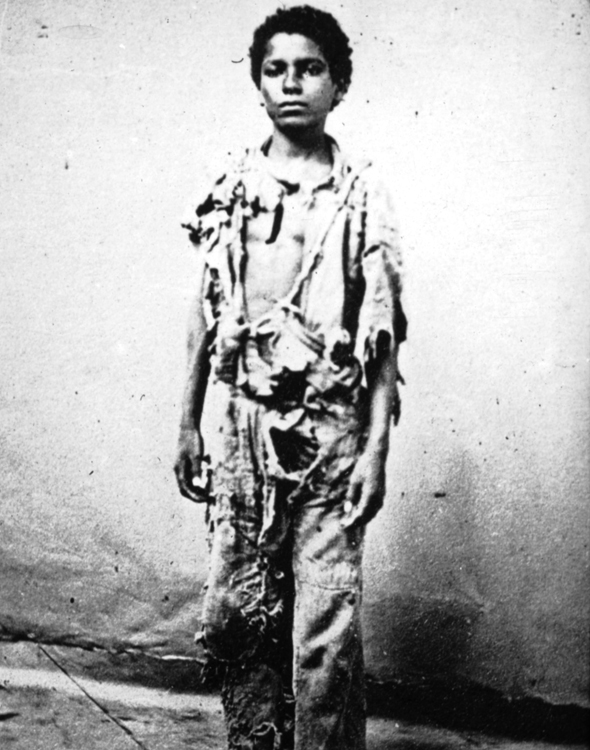
Enslaved Black people faced violence, abuse, dehumanization, and separation from their loved ones. Those who attempted escape faced overwhelming forces determined to keep them in chains. To help, Black people and their allies developed an activist network that stretched from South to North, providing shelter, transportation, food, and other resources to thousands of runaways. This network became known as the Underground Railroad.
One of the railroad’s most famous and effective leaders was Harriet Tubman, a Black woman who escaped slavery in 1849 and returned to the South at least 15 times to guide more than 200 people out of slavery. Henry Highland Garnet escaped slavery as a child in 1824 and worked toward abolition as an adult, sheltering more than 150 fugitive slaves in his Albany, New York, home over the course of a single year.
Like the people they worked to help, “conductors” on the Underground Railroad faced the risk of severe punishment. When caught journeying into the South in 1847, Black abolitionist Samuel D. Burns was jailed for 14 months in Dover, Delaware. When authorities tried to sell him at auction, fellow abolitionists arranged to purchase and free him. In 1855, Alfred Wooby was sentenced to death in Bertie County, North Carolina, for hiding an enslaved person on a boat headed North. And in 1857, abolitionist Elijah Anderson died in a Kentucky prison while serving a sentence for transporting fugitive slaves across state lines.
Many who attempted to escape slavery did not reach freedom. When “slave catchers” surrounded Margaret Garner and her family in Ohio in 1856 after they ran from slavery in Kentucky, she acted on her conviction that returning to bondage was a fate worse than death by killing her young daughter and attempting to kill her other children and herself. She was returned to slavery and died of typhoid fever in 1858.
Perhaps thinking of those left behind, Black people who escaped slavery often took additional risks to strengthen the abolition movement by publishing their stories in books and pamphlets that were disseminated throughout the North to spread anti-slavery sentiment. Nearly 100 slave narratives – written accounts of the lives of runaway slaves – were published as books and some, including Frederick Douglass’s Narrative of the Life of Frederick Douglass (1843) and Solomon Northup’s Twelve Years A Slave (1853) became national best-sellers that exposed mass audiences to the brutal inhumanity of American slavery.