The Commerce of Human Trafficking
Scroll for moreEnslaved people were treated as commodities to be sold, given away, and used as collateral.
The bodies of Black men, women, and children enslaved in America were assigned monetary values throughout their lives. An enslaved person’s purchase price was a painful reminder of how his or her life was commodified, and changes in this assigned monetary value could profoundly affect an enslaved person’s destiny. Some of the greatest heartbreaks and inhumanities of enslavement arose from the cold valuation of human life.
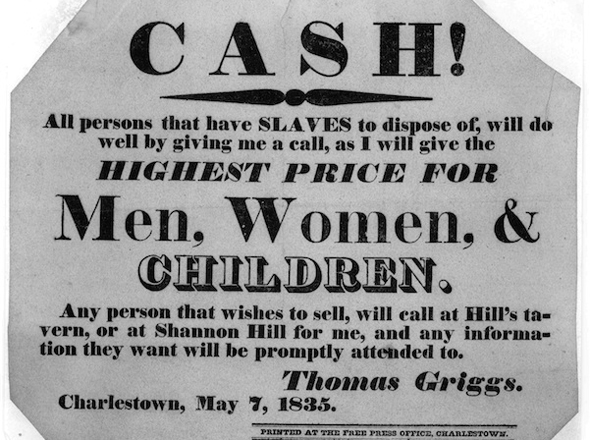
Throughout their lives, enslaved people were sold, given away, used as collateral, or even mortgaged. To determine their price, owners and buyers frequently stripped enslaved people naked and examined every part of their bodies. Women deemed desirable for sexual exploitation were called “fancies” and commanded higher prices.
Enslaved people were appraised as human “assets” to allow slaveowners to report on their “property” holdings for the purposes of insurance, wills, and taxes. These appraisals greatly enriched the estates of enslavers. Between 1797 and 1865, the average enslaved girl was worth $236, and the average boy $258 (in 1860 dollars). The average value for adult women was $528 and men $747 – more than $15,000 and $21,000, respectively, today. Values for enslaved people could reach more than $5000 ($150,000 today).
Slaveowners regularly ignored family bonds among enslaved people to prioritize profits, and treated reproduction as an economic process. After puberty, an enslaved woman’s value was largely based on her ability to bear children. Auction announcements advertised enslaved women for sale as “good breeders,” and women who had already given birth to healthy children brought a higher price. This was known as an enslaved woman’s “increase” – the same term used to describe the breeding potential of livestock.
Slaveowners tried to control the timing of pregnancies to maximize work efficiency by separating spouses from one another for extended periods. Women were frequently ripped from their families and newborns soon after childbirth. Because enslavement was by law a permanent and hereditary status, enslaved men and women had no parental rights, and children could be sold from infancy. A child’s value was calculated annually and influenced by his or her health, demeanor, and skills. Many historical accounts describe aggrieved parents’ mostly unsuccessful attempts to raise money to buy their own children.
Enslaved men were most prized for their physical ability, and men in their 30s who were considered to possess peak strength and skill were advertised as “prime hands,” “full hands,” or “A1 Prime.” Depending on health and strength, enslaved men typically received high appraisals well into middle age, while enslaved women lost much of their value when they passed childbearing age. Enslaved men and women were trafficked and insured well into old age, when they were assigned degrading and humiliating low prices.
Even after death, some slaveowners sold Black corpses for medical research. The extremely lucrative trafficking in corpses did not legally require consent or compensation for surviving relatives, and in some cases, grave robbers exhumed and sold the bodies of enslaved people.
The sale of enslaved Black people from the upper to lower South created horrific practices.
In the decades after the Transatlantic Slave Trade was outlawed in the United States, the domestic slave trade exploded to meet the demand for labor created by the booming cotton industry. As cotton fueled America’s emergence as the world’s fastest-growing economy, the sale of enslaved Black people from the upper to lower South created horrific practices, including the brutal overland marches of chained slaves; the selling of children and separation of families; and the kidnapping of free Black people to be sold into enslavement.
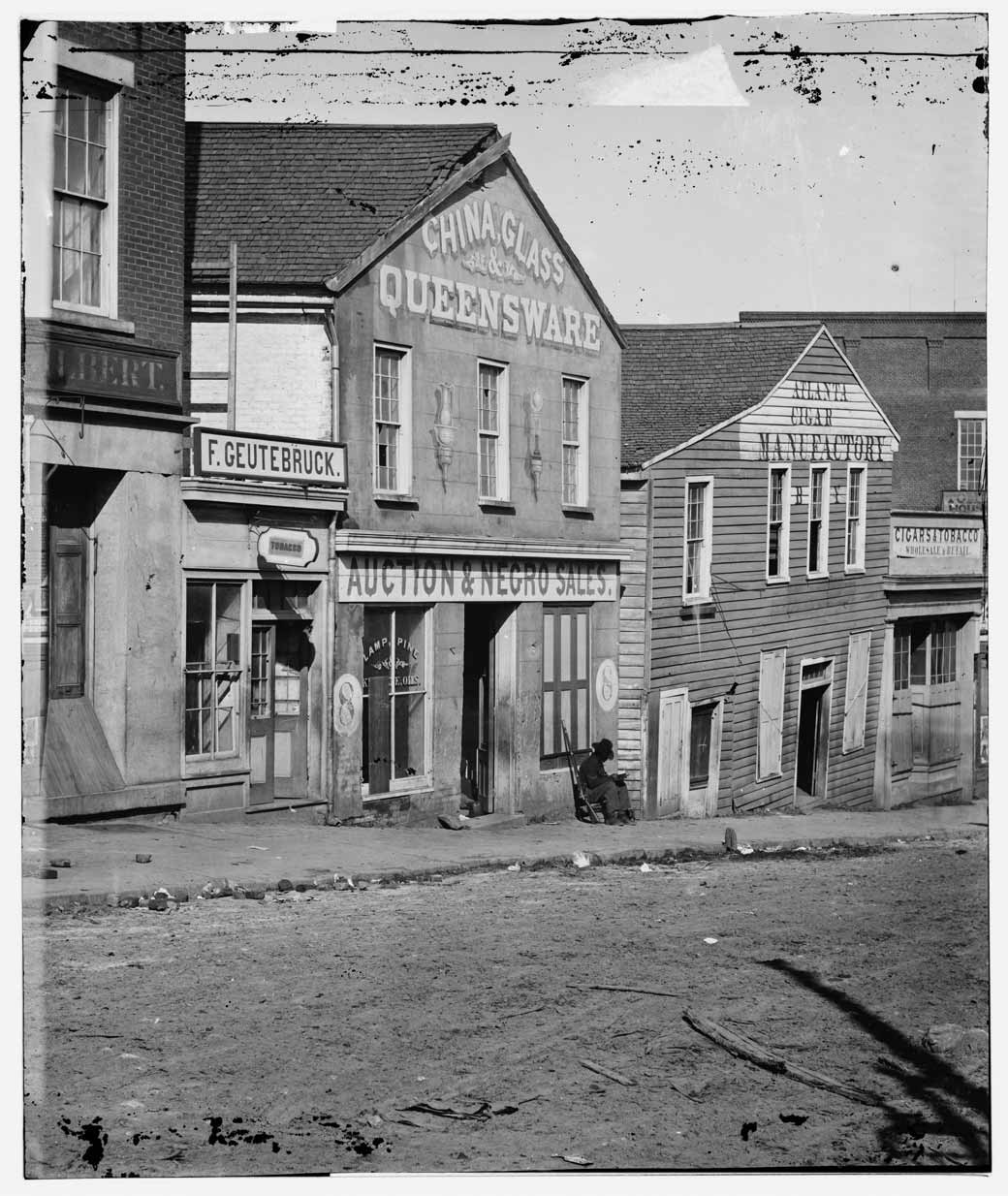
In the late 18th and early 19th centuries, white settlers acquired great swaths of fertile land in territories that would later become the Lower South states of Alabama, Louisiana, Mississippi, and Florida. Soon after, the region’s demand for enslaved Black labor skyrocketed. Between 1810 and 1860, a million enslaved Africans were forcibly transported from the Upper South to the Lower South, and slave traders accumulated vast wealth in the process.
To transport enslaved people on foot – the “simplest” method – traders handcuffed men in pairs, then ran a long chain through the handcuffs to form a “coffle.” Enslaved Black women and older children marched behind, while small children and the sick rode in a rear wagon. This brutal overland march could last months, and those who lagged or collapsed were whipped.
Federal laws protecting slaveowners’ “property” interests facilitated widespread kidnapping for profit that left all Black people vulnerable. The Fugitive Slave Act of 1793 empowered slaveowners to seize enslaved people fleeing bondage and compelled Northern officials to assist in that effort. In 1842, the United States Supreme Court struck down a Pennsylvania law banning seizure and enslavement of Black people living in the state; in Prigg v. Pennsylvania, the Court ruled that states could not excuse their officials from complying with fugitive slave laws.
As conflict between Northern abolitionists and Southern slaveholders neared civil war, the Fugitive Slave Act of 1850 imposed harsher punishments for interfering with slaveowners’ efforts to recapture runaway slaves. Courts refused to grant Black people legal protection and turned a blind eye to the kidnapping of free and “fugitive” African Americans alike, leaving Black people throughout the country vulnerable to seizure by slave traders seeking to “return” them to slavery for profit.
In one case, a free young Black man named Jesse was kidnapped in Maryland, taken to Richmond, Virginia, then sold and shipped to Montgomery, Alabama, where laws did not require traders to prove that the people they sold were legally enslaved. The Goldthwaite family bought Jesse and ignored his story, refusing to free him or contact his family. When he was emancipated decades later as an elderly man, Jesse searched for his relatives but never found them. Today, a downtown Montgomery street is named for the Goldthwaite family, while Jesse’s story and many others like it have been largely forgotten.