Cotton and Slavery: Economic Engine
Scroll for moreAmerican slavery fueled economic growth across the country and around the world.
Beyond its benefit to Southern plantation owners, American slavery was a major engine of economic growth throughout the United States and worldwide. The labor of enslaved Black people in the United States fueled explosive economic growth and wealth accumulation during the 19th century, particularly in the thriving cotton and textile markets. Many businesses and families that became vastly wealthy in the North in this era can directly trace their fortunes to the toil of the enslaved.
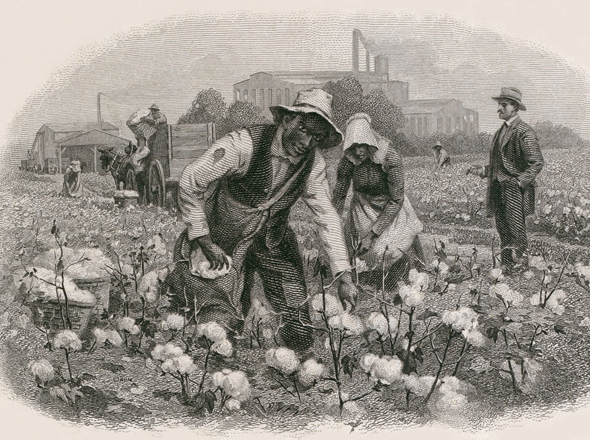
Enslavement did not enrich the American South exclusively. Throughout the 19th century, the United States and its trading partners profited immensely from the labor of enslaved Africans. By 1830, one million American workers labored in the cultivation of cotton, and almost all of them were enslaved. Cotton constituted more than half of the United States’s global exports.
The introduction of the cotton gin and other innovations multiplied the profitability of the textile industry, and using enslaved laborers, American cotton grew into a global empire. By 1820, enslaved labor produced 59 percent of the cotton traded in Liverpool, England, the world’s most important cotton market. By 1850, roughly three-quarters of cotton consumed in Europe came from slave plantations.
The trade of cotton picked by enslaved people in the South enabled an unprecedented expansion of wealth worldwide. European and American businessmen reaped immense profits. They spun and sold cheap yarn and cloth, lent money, collateralized debt, and built tremendous industries that still exist today.
Nearly all American industries depended on the work of enslaved people. Merchants in the North traded cotton, sugar, and other agricultural products grown by enslaved people. Banks and creditors accepted enslaved human “property” as collateral when underwriting loans, and were authorized to “repossess” enslaved people if a debtor failed to repay the loan. In this way, financial institutions became directly involved in the slave trade.
Banks from New York to London profited greatly by investing in Southern industries that used enslaved labor. Northern and international interests benefitted from Southern cotton and were complicit in the brutal system of enslavement used to grow it.