Extreme Punishments Imposed on Enslaved People
Scroll for moreNo laws prevented slaveowners from inflicting horrific cruelty on enslaved people.
As an institution, slavery deprived enslaved people of any legal rights or autonomy and granted the slaveholder complete power over the Black men, women, and children legally recognized as their property. Enslaved people frequently suffered extreme physical violence to punish or deter them from transgressions like running away, failing to complete assigned tasks, visiting a spouse living on another plantation, learning to read, arguing with white people, working too slowly, possessing anti- slavery materials, or trying to prevent the sale of their relatives.
Slaveholders faced no formal prohibitions against maiming or killing enslaved people, and this lack of legal protection for Black people’s lives sometimes led to horrific cruelty. In 1839, a Kentucky woman told the story of two young Black men named Ned and John who were whipped to death by their master as punishment for staying too long on visits with their wives on a different plantation.
“Mr. Long would tie them up by the wrist, so high that their toes would just touch the ground, and then with a cow-hide lay the lash upon the naked back, until he was exhausted, when he would sit down and rest. As soon as he had rested sufficiently, he would ply the cow-hide again, thus he would continue until the whole back of the poor victim was lacerated into one uniform coat of blood.”
Survivors carried physical evidence of this abuse. An infamous photo taken in 1863 shows graphic scars on the back of a Black man named Private Gordon, who was frequently whipped while enslaved in Louisiana. In Charleston, South Carolina, in 1828, an enslaved 13-year-old girl died after she was flogged by her owner; he faced no consequences because, under state law, the girl was his property to destroy as he chose.
Throughout this era, Southern slaveholders defended slavery as a benevolent system that benefitted enslaved Black people – and those claims persist today, generations after Emancipation, to justify more than two centuries of human bondage, forced labor, and abuse. Contemporaneous records paint a much different picture, revealing American slavery as an institution that was always dehumanizing and barbaric, and was often bloody, brutal, and violent.
In May 1857, four enslaved Black men were tried and found not guilty of killing a white family in Louisville, Kentucky, only to be seized from jail, stabbed, and hanged by an outraged white mob so terrifying that one of the Black men slit his own throat as the mob advanced.
During the Civil War, a young Black woman named Amy Spain was hanged by Confederate forces in Darlington, South Carolina, after she was accused of assisting Union troops. Ending slavery was not enough to eradicate the dangerous beliefs that excused and approved the degradation of Black bodies. The brutal punishments suffered by enslaved people directly foreshadowed the lynching era that followed Reconstruction.
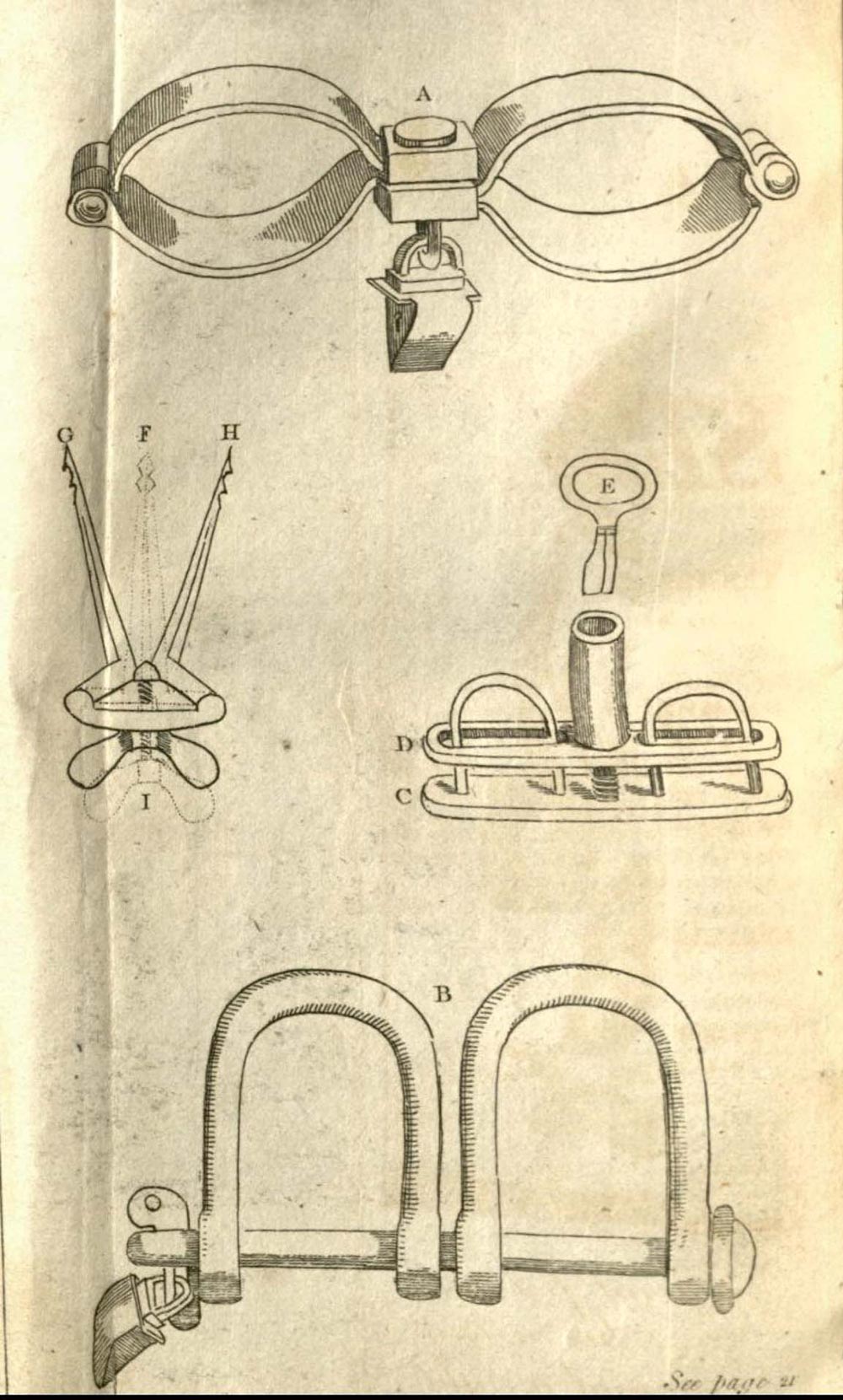
A range of painful devices were designed to restrain and punish enslaved people.
In response to “Uncle Tom’s Cabin,” Southern writers published novels that defended enslavement.
In 1852, Harriet Beecher Stowe published “Uncle Tom’s Cabin,” a very popular novel that fueled Northern opposition to slavery by dramatizing the brutality of enslavement. Many Southern writers responded with “anti-Tom” novels featuring enslaved characters tragically duped by Northern abolitionists into running away from white “masters” who treated them so kindly they didn’t want to leave. The myth that slavery was a benevolent institution that benefited Black people persists in some public narratives today.
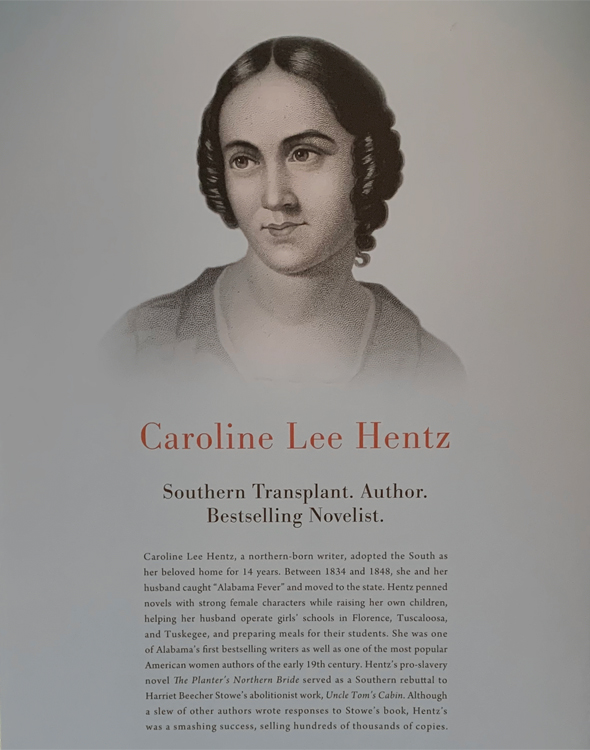
In 1854, Caroline Lee Hentz, a Massachusetts-born white woman who moved to Alabama as an adult, wrote an “anti-Tom” novel entitled, “The Planter’s Northern Bride.” The main character, Eulalia, is a white woman and the daughter of an abolitionist. She abandons her opposition to slavery after marrying a benevolent slave owner and observing that most slave owners treated enslaved people with “affectionate kindness.” Ms. Hentz insists in the preface that her fictional story was based on her real observations, writing that she had “never witnessed one scene of cruelty or oppression” by slave owners and that enslaved people were the “happiest labouring class on the face of the globe.”
Like many other Southern writers, Ms. Hentz described Black people as morally and intellectually inferior to white people, writing that “Africa has remained, as a nation, [sic] in the same low, degraded condition in which it pleased the Great Creator to place her . . . in the depth and darkness of the ignorance, slothfulness, sensuality, and heathenism in which it was sunk nearly four thousand years ago, it still exists, and God has not laid bare his omnipotent arm to exalt it in the scale of being . . . Why not arraign the Almighty with injustice and partiality, in creating one nation for glory and honour, and another for dishonour and degradation?”
“The Planter’s Northern Bride” was instantly popular and sold hundreds of thousands of copies, along with Ms. Hentz’s other books. It even won a cash prize from the city of Columbus, Georgia. Though her book’s racism is undeniable, Ms. Hentz (who lived in Alabama for 14 years) has been prominently honored at the Alabama State Capitol as part of a traveling exhibit for the state’s bicentennial that celebrates a “full and fascinating cast of local, unsung heroes and world-famous champions of change.”
The exhibit notes that “The Planter’s Northern Bride” was a pro-slavery “rebuttal to Harriet Beecher Stowe’s abolitionist work, Uncle Tom’s Cabin . . . [and] was a smashing success, selling hundreds of copies.” None of Ms. Hentz’s other works are mentioned in the exhibit.